Puff Printing Hoodie: How It Works and Why It’s Trending
Foaming printing technology makes the printing paste expand through thermal curing to form a three-dimensional effect. The process requires that the foaming agent be heated at 160-180 degrees Celsius for 90-120 seconds, and the expansion height can reach 1.5-2 millimeters, which is 300% thicker than ordinary printing. Industry data shows that the production cost of hoodies using the puff printing hoodie production process is 25-30% higher than that of ordinary printing, but the retail premium can reach 50%, increasing the gross profit margin to more than 45%. Industry terms involve thermosetting foaming agents, three-dimensional printing and expansion coefficient control. For instance, the use of polyureticia-based foaming pastes can increase the number of washes from 20 to 50. In 2023, the collaboration series between the trendy brand Supreme and Nike adopted this technology. A single hoodie was priced at $150, and the first batch of 5,000 pieces sold out within 7 minutes, setting a sales record of 11.9 pieces per second.
Market data shows that foamed printed hoodies saw a 35% year-on-year growth in the first quarter of 2024, with a preference rate of 62% among Gen Z consumers. Technical parameters show that the optimal foaming concentration is controlled within the range of 8-12%, the expansion volume rate can reach 380% of the original state, and the temperature deviation needs to be controlled within ±2 degrees Celsius to ensure quality stability. Industry terms cover viscosity control and stereoscopic retention technology. Automated production lines can achieve a printing positioning accuracy within an error range of 0.3 millimeters. In the example citation, the independent designer brand Pleasures2024 Spring/Summer collection adopted a digitally controlled foaming system, reducing the production cycle from the traditional 72 hours to 24 hours, lowering the defect rate from 15% to 4%, and simultaneously achieving a 150% enhancement in the three-dimensional effect of complex patterns.
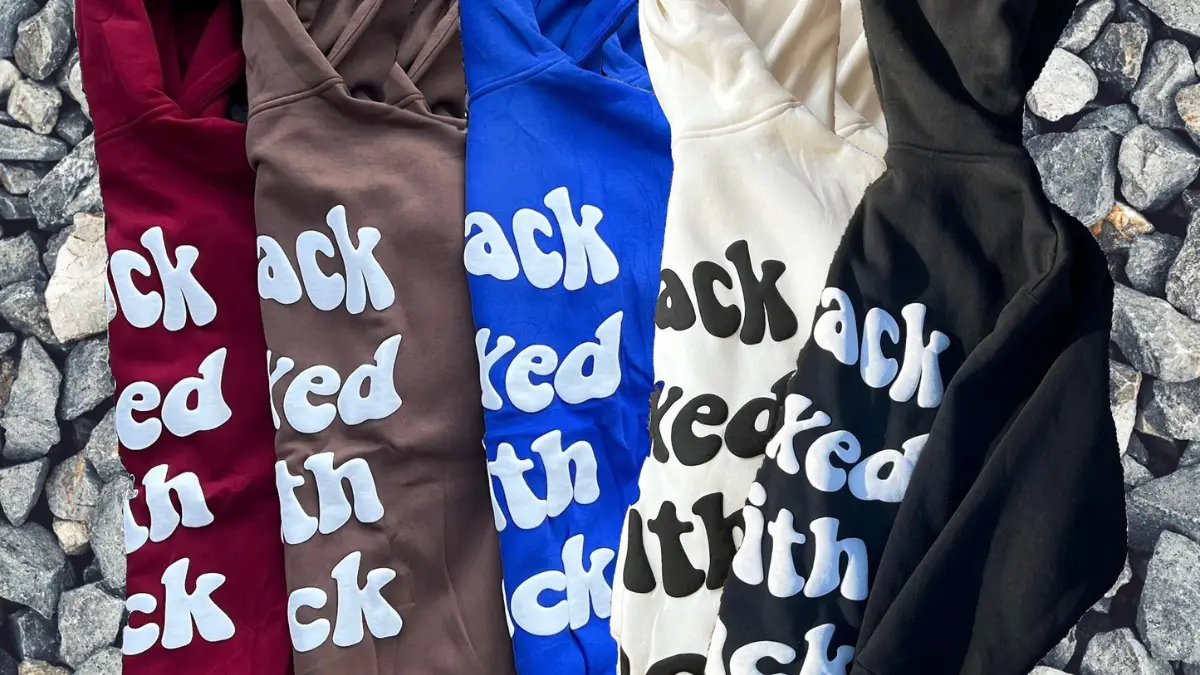 Brand application cases show that the penetration rate of foam printing in the sportswear field has increased from 18% in 2022 to 35% in 2024. The technological upgrade has enabled the minimum pattern accuracy to reach 2 millimeters of line width. The abrasion resistance test has exceeded 30,000 times while still maintaining 85% three-dimensionality, and the UV resistance has reached 500 hours without yellowing. Industry terms include microfoaming control and multi-layer stacking technology, which uses environmentally friendly water-based foaming agents to reduce VOC emissions by 70%. In the example citation, the new 2024 adidas sports hoodie adopts gradient foaming technology, achieving a variable thickness of 0.5 to 3 millimeters at different parts. It reduces the carbon footprint by 40% through bio-based foaming materials and has obtained the global Recycled Standard (GRS) certification.
Sustainable development and innovation have driven the upgrading of foaming printing technology. The 2024 industry report shows that the number of products using plant-based foaming agents has increased by 120%, energy consumption has decreased by 25%, and the wastewater recycling rate has reached 85%. Industry terms involve low-temperature curing and energy-saving drying systems. The intelligent temperature control device can increase energy utilization efficiency by 35%. In the example citation, Patagonia's 2023 eco-friendly series adopted a new foaming technology, reducing the production temperature from 180℃ to 130℃, lowering power consumption by 40%, while maintaining an expansion rate compliance rate of 98.5%. This innovation won the Gold Award for Sustainable Development in the Outdoor Industry in 2024.
Brand application cases show that the penetration rate of foam printing in the sportswear field has increased from 18% in 2022 to 35% in 2024. The technological upgrade has enabled the minimum pattern accuracy to reach 2 millimeters of line width. The abrasion resistance test has exceeded 30,000 times while still maintaining 85% three-dimensionality, and the UV resistance has reached 500 hours without yellowing. Industry terms include microfoaming control and multi-layer stacking technology, which uses environmentally friendly water-based foaming agents to reduce VOC emissions by 70%. In the example citation, the new 2024 adidas sports hoodie adopts gradient foaming technology, achieving a variable thickness of 0.5 to 3 millimeters at different parts. It reduces the carbon footprint by 40% through bio-based foaming materials and has obtained the global Recycled Standard (GRS) certification.
Sustainable development and innovation have driven the upgrading of foaming printing technology. The 2024 industry report shows that the number of products using plant-based foaming agents has increased by 120%, energy consumption has decreased by 25%, and the wastewater recycling rate has reached 85%. Industry terms involve low-temperature curing and energy-saving drying systems. The intelligent temperature control device can increase energy utilization efficiency by 35%. In the example citation, Patagonia's 2023 eco-friendly series adopted a new foaming technology, reducing the production temperature from 180℃ to 130℃, lowering power consumption by 40%, while maintaining an expansion rate compliance rate of 98.5%. This innovation won the Gold Award for Sustainable Development in the Outdoor Industry in 2024.
Brand application cases show that the penetration rate of foam printing in the sportswear field has increased from 18% in 2022 to 35% in 2024. The technological upgrade has enabled the minimum pattern accuracy to reach 2 millimeters of line width. The abrasion resistance test has exceeded 30,000 times while still maintaining 85% three-dimensionality, and the UV resistance has reached 500 hours without yellowing. Industry terms include microfoaming control and multi-layer stacking technology, which uses environmentally friendly water-based foaming agents to reduce VOC emissions by 70%. In the example citation, the new 2024 adidas sports hoodie adopts gradient foaming technology, achieving a variable thickness of 0.5 to 3 millimeters at different parts. It reduces the carbon footprint by 40% through bio-based foaming materials and has obtained the global Recycled Standard (GRS) certification.
Sustainable development and innovation have driven the upgrading of foaming printing technology. The 2024 industry report shows that the number of products using plant-based foaming agents has increased by 120%, energy consumption has decreased by 25%, and the wastewater recycling rate has reached 85%. Industry terms involve low-temperature curing and energy-saving drying systems. The intelligent temperature control device can increase energy utilization efficiency by 35%. In the example citation, Patagonia's 2023 eco-friendly series adopted a new foaming technology, reducing the production temperature from 180℃ to 130℃, lowering power consumption by 40%, while maintaining an expansion rate compliance rate of 98.5%. This innovation won the Gold Award for Sustainable Development in the Outdoor Industry in 2024.